
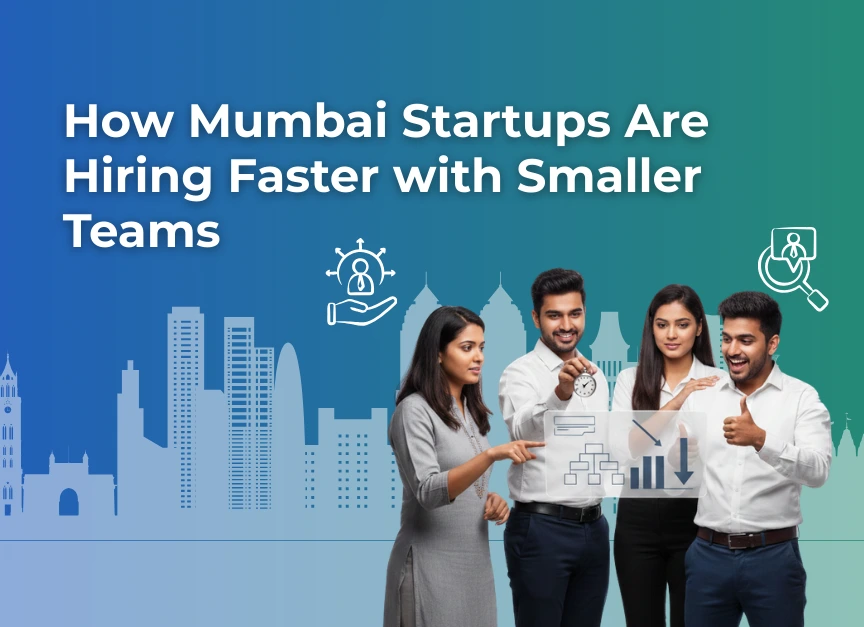
How Startups Are Hiring Faster with Smaller Teams in Mumbai
Written By JobsBob Editor Team
Updated 20 February 2026
In Mumbai, the startup ecosystem is going through a quiet but powerful transformation. The city that was once known mainly for finance, media, and real estate is now being recognised for something new: extreme operational efficiency. Instead of growing through large teams and heavy hiring in Mumbai, startups are scaling by staying lean, using technology smartly, and hiring only high-impact talent. This shift marks a clear departure from the earlier “growth at all costs” mindset. Today, startups in Mumbai are hiring faster than ever before, even though their HR and recruitment teams are much smaller.
Just a few years ago, success in the startup world was often measured by how fast a company could grow its team. Hiring dozens of employees was seen as progress. In 2026, this thinking has changed completely.
Startups now believe that:
-
Bigger teams slow down decision-making
-
More people increase costs and complexity
-
Small teams move faster and stay focused
Instead of hiring many people for narrow roles, new startups prefer a few highly capable individuals who can handle multiple responsibilities. The goal is not to “look big,” but to work smart.
This blog explains what are the major changes and how and why these changes have happened, and what it means for the future of startups in India.
The Evolution of Startups’ Hiring in Mumbai
Let’s explore the evolution of hiring methods in Mumbai and how they are changing in 2026.
1) Smaller HR Teams, Faster Hiring in Mumbai
One of the most noticeable changes is the size of recruitment teams themselves. Many startups that earlier had large HR departments now operate with just one or two people handling hiring.
This works because startups now use:
-
Automated resume screening tools
-
Online skill assessments
-
Auto-scheduled interviews
Instead of manually reviewing hundreds of resumes, software shortlists only the most relevant candidates. Founders or team leads then speak directly to a small number of applicants and make quick decisions.
2) Shifting Away From Traditional Hiring Methods
The old hiring method followed a long funnel: job posting, hundreds of applications, multiple interview rounds, and long delays. In 2026, Mumbai startups have moved away from this model.
Instead, they focus on precision hiring.
Rather than waiting for applications, startups actively search for suitable candidates on platforms like LinkedIn, GitHub, and niche communities. This reduces noise and saves time.
Example:
Instead of posting a job and receiving 1,000 resumes, a founder identifies 5 strong profiles online and reaches out directly. Two interviews later, the vacancy is filled.
This focused approach helps top startups in India hire faster while maintaining quality.
3) AI-Assisted Development Reshaping Hiring
One of the biggest reasons startups can stay lean in 2026 is the rise of AI-assisted development, often called Vibe Coding.
In simple terms, this means:
-
AI tools write most repetitive code
-
Developers focus on logic, structure, and product thinking
-
Work that earlier took days now takes hours
Because of this, startups no longer need large engineering teams.
Example:
Earlier, building a basic feature required multiple developers and weeks of work. Today, one AI-skilled developer can build the same feature in a single day.
This shift allows new startups to operate with very small tech teams while still moving fast.
4) From Coders to Product Engineers Recruitment
Hiring requirements have also changed. Mumbai startups are no longer looking for people who can do only one technical task. Instead, they prefer product engineers.
A product engineer:
-
Understands user problems
-
Can design basic interfaces
-
Uses AI tools for development
-
Tests and improves their own work
Example:
Instead of hiring three people—designer, developer, and tester—a startup hires one product engineer who can manage all three areas at a functional level.
This reduces hiring time, interview rounds, and dependency on large teams. It is a key reason why startups in Mumbai are hiring quickly with fewer people.
5) Hiring For Skilled Candidates Over Degrees
Another major shift in 2026 is the move toward skills-first hiring. While education still matters, it is no longer the deciding factor.
Startups now prioritise:
-
Live projects
-
Portfolios
-
Public proof of work
Example:
A candidate with an average college background but strong real-world projects is often preferred over someone with a prestigious degree but no hands-on experience.
This approach helps startups make faster decisions and avoids long interview processes. It has also opened opportunities for talented professionals across startups in India, regardless of their educational background.
6) The Hub-and-Spoke Model
Mumbai startups have also changed where they hire from.
Leadership teams may sit in Mumbai, but many employees now work from:
-
Nagpur
-
Nashik
-
Indore
-
Jaipur
Why startups like this:
-
Lower salary expectations
-
Strong talent availability
-
Remote work culture
This model allows startups in Mumbai to grow without being limited by the city’s high costs.
7) Fractional Leadership Over Full-Time Executives
In 2026, many startups avoid hiring full-time senior executives. Instead, they use fractional leaders—experienced professionals who work part-time or on specific projects.
Common examples include:
-
Fractional CTOs for technical guidance
-
Fractional CMOs for growth strategy
-
Fractional CFOs for financial planning
Example:
A startup hires a CTO for 6 hours a week instead of paying a full-time salary. This gives them expert guidance without increasing long-term expenses.
This model is especially popular among new startups aiming to stay lean while accessing top-level expertise.
8) Project-Based Hiring and Short Sprints
Instead of building permanent departments, Mumbai startups now hire teams for short-term needs.
Example:
A startup hires a design team for one month to redesign its app. After launch, the team disbands, and the startup returns to its core group.
This sprint-based approach keeps costs flexible and helps startups move quickly—one of the main reasons top startups in India can innovate faster.
9) Faster Onboarding with the 24-Hour Rule
Hiring speed means nothing if new employees take months to become productive. In 2026, startups focus heavily on quick onboarding.
On the first day, new hires receive:
-
Tool access
-
Clear documentation
-
AI-guided onboarding support
Many startups follow a 24-hour productivity rule, where new hires complete one meaningful task on their first day. This helps teams identify fit quickly and maintain momentum.
10) Founders Taking the Lead in Hiring
Recruitment is no longer handled only by HR. In many Mumbai startups, founders play a direct role in hiring.
By sharing:
-
Company vision
-
Daily challenges
-
Product updates
Founders attract candidates who already understand and believe in the startup’s mission. This reduces hiring time and improves cultural alignment across startups in Mumbai.
Final Thoughts
The hiring trends in Mumbai make one thing clear: efficiency beats size. By using AI tools, focusing on skills, embracing flexible roles, and staying lean, startups are building strong companies with fewer people.
In 2026, startups in Mumbai are setting a powerful example for startups in India. Success is no longer about how many people you hire—it’s about hiring the right people and enabling them to do their best work. That is the real future of startup hiring.