
What is Hybrid Work and How Does It Affect Work-Life Balance?
Written By JobsBob Editor Team
Updated 28 April 2026
Imagine your school gives you a fun choice—you don’t have to come every day. Some days you study at home in comfort, and some days you go to school to meet your friends and teachers. Sounds exciting, right? That’s exactly what hybrid work is for adults. Instead of going to the office daily, they work some days from home and some days in the office. This smart mix gives them the best of both worlds—comfort and connection. They save travel time, feel less tired, and get more time for family, hobbies, and rest. This is how they improve their work-life balance, meaning they can manage both work and personal life happily. But here’s something to think about—do you think working from home all the time would make life easier, or would it make it harder to separate work and fun?
What is Hybrid Work?
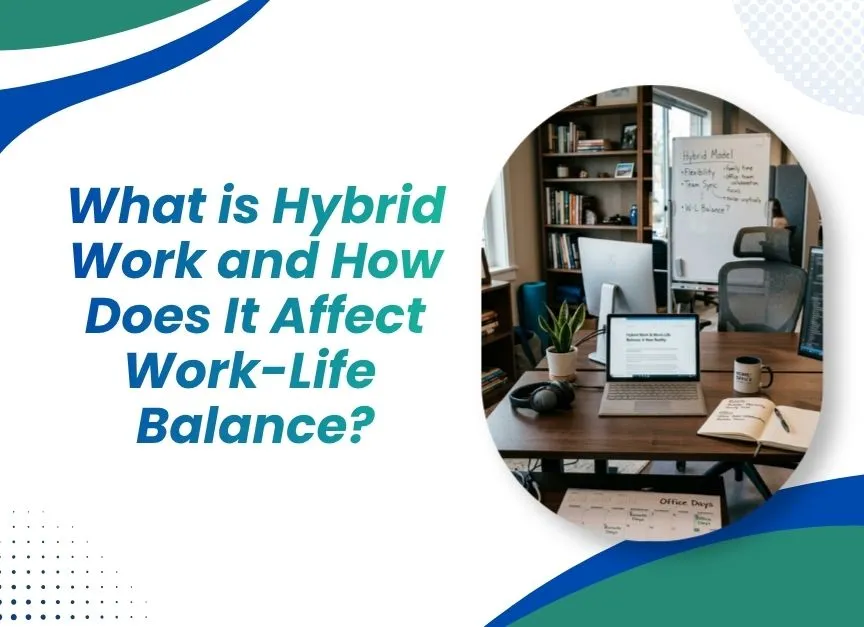
Hybrid work is a modern and flexible working model where employees smartly divide their time between remote work (home or any location) and working from a physical office. It is designed to combine the independence and comfort of working from home with the collaboration, creativity, and structure of an office environment. In simple words, the hybrid work meaning is about working where you perform best—while staying connected with your team and goals.
For example, imagine starting your week at home on Monday and Tuesday, focusing deeply on tasks without distractions. Mid-week, you step into the office on Wednesday and Thursday for meetings, brainstorming, and team discussions. Then, you wrap up your week from home again on Friday with focused execution. This smart flow not only boosts productivity but also keeps work interesting and less stressful.
Types of Hybrid Work Models
Hybrid work is not a one-size-fits-all approach—it adapts based on company goals, employee needs, and the nature of work. Different organizations use different hybrid work models to create the right balance between flexibility and productivity. Understanding these models helps you clearly grasp the hybrid work meaning and choose what suits you best.
1. Fixed Hybrid Model
In the fixed hybrid model, employees follow a pre-decided schedule set by the company. This means certain days are fixed for working from the office, while the remaining days are for remote work. It brings structure and predictability, making it easier for teams to plan meetings and collaborate effectively.
2. Flexible Hybrid Model
The flexible hybrid model gives employees the freedom to decide when and where they want to work. Instead of a fixed schedule, individuals can choose between home and office depending on their workload, productivity level, or personal preferences. This model is highly employee-centric and promotes trust and independence.
3. Remote-First Model
In the remote-first model, remote work is the primary mode, and the office becomes optional. Employees usually work from home or any location, and they visit the office only when necessary, such as for important meetings or team events. This model is common in global and tech-driven companies.
4. Office-First Hybrid Model
In the office-first hybrid model, the office remains the primary workplace, but employees are given limited flexibility to work from home when needed. This approach is often used by organizations that rely heavily on in-person collaboration but still want to offer some level of flexibility.
Why Hybrid Work is Becoming So Popular?
Hybrid work is becoming popular because it offers the perfect balance between flexibility and productivity. It allows employees to work smarter while helping companies reduce costs and access better talent worldwide. So, what exactly makes hybrid work the top choice for modern workplaces today? Let’s explore.
1. Flexibility for Employees
One of the biggest reasons hybrid work is becoming popular is the flexibility it offers. Employees are no longer restricted to fixed office hours or locations. They can plan their workday based on their most productive time and personal needs. This makes it easier to balance work and life. Starting the day from home can feel more relaxed and less stressful, while office days can be chosen when teamwork or meetings are needed.
2. Increased Productivity
Hybrid work can increase productivity because employees can choose where they work best. Home is often a good place for tasks that need deep focus, as there are fewer distractions. On the other hand, the office is useful for discussions, teamwork, and brainstorming ideas. This balance allows employees to use their time more efficiently. This smart combination of work environments helps improve both the quality and speed of work.
3. Cost Savings
Hybrid work provides strong financial benefits for both employees and organisations. Employees save money on daily commuting, fuel, public transport, and outside meals. For example, a worker who travels 20 km daily can save a significant amount on fuel and food by working from home a few days a week. At the same time, companies reduce expenses on office rent, electricity, and maintenance.
4. Access to Global Talent
Hybrid work allows companies to hire skilled professionals from different locations, not just nearby areas. This expands their talent pool and brings diverse ideas into the team. This helps the company find the best talent without requiring relocation. It also allows employees to work for top companies without moving cities. As a result, teams become more creative and innovative due to different perspectives. Removing location limits helps organisations grow faster and build stronger, more diverse teams.
How Hybrid Work Impacts Work-Life Balance
Hybrid work has a direct impact on work-life balance because it changes how, when, and where people work. It can make life more flexible and comfortable, but at the same time, it can also create confusion between work and personal life if not managed properly. Hybrid work isn’t just a trend—it’s a lifestyle shift. And like every big change, it comes with both exciting benefits and a few challenges. Let’s break them down.
Positive Impact |
Negative Aspects |
|
More Personal Time: Hybrid work quietly gives you something invaluable—time. Instead of spending hours commuting, you can use that time for yourself. You can start your day calmly, enjoy a cup of tea, or take a short walk. Even small moments, like having breakfast with family or listening to music without rushing, can significantly improve your mood. |
Blurred Boundaries: One major challenge of hybrid work is the overlap between personal and professional life. When your home becomes your office, switching off becomes difficult. For instance, checking one email after dinner can easily turn into an extra hour of work. |
|
Better Mental Health: Working from a comfortable, familiar space reduces daily stress. Without the pressure of commuting or office noise, you can create an environment that supports focus and calmness. Simple breaks—like stretching, listening to music, or sitting quietly—help refresh your mind and reduce anxiety. |
Communication Gaps: In hybrid setups, communication can become slower and less effective. Quick, informal discussions are harder to replicate online. A problem that could be solved in minutes face-to-face might take hours through messages or emails. |
|
Improved Work-Life Control: Hybrid work allows greater control over your schedule—if managed well. Setting clear boundaries, such as logging off on time or taking regular breaks, helps maintain a healthy balance. This control can reduce burnout and keep your energy levels steady. |
Isolation and Loneliness: Limited face-to-face interaction can lead to feelings of disconnection. Working alone for extended periods may reduce engagement and make the work environment feel less dynamic. |
|
Increased Job Satisfaction: Hybrid work often reflects trust and flexibility from employers. This sense of autonomy can boost confidence and motivation. When employees feel respected and not constantly monitored, work becomes more meaningful and satisfying. |
Overworking Tendency: Many employees feel the need to prove productivity while working remotely, which can lead to longer working hours. This habit of overworking can gradually affect both mental and physical well-being. |
Is Hybrid Work Right for Everyone?
Hybrid work is a powerful and flexible model, but it’s not a perfect fit for every profession. Its effectiveness depends on the nature of the job, the need for physical presence, and how work is delivered. Understanding where hybrid work fits best helps individuals and businesses make smarter decisions.
-
IT Professionals: Hybrid work suits IT professionals, as tasks like coding, testing, and system management can be done remotely with ease.
-
Digital Marketers: Digital marketers benefit from hybrid work since most tasks—ads, social media, and analytics—are online. This allows them to work from anywhere while staying connected.
-
Content Creators: Content creators thrive in hybrid work as creativity improves in comfortable environments. Working from home helps them focus, while office visits support collaboration.
-
Designers: Designers need both independent focus and teamwork, making hybrid work ideal. They can design from home and collaborate in the office for feedback.
Conclusion
Hybrid work is transforming how we live and work by creating a balance between flexibility and responsibility. It positively affects work-life balance by saving time, reducing stress, and giving people more control over their routine. However, without proper boundaries, it can also lead to overworking and imbalance. In conclusion, hybrid work impacts life both positively and negatively—but when managed smartly, it becomes a powerful way to build a productive, balanced, and more satisfying lifestyle.