

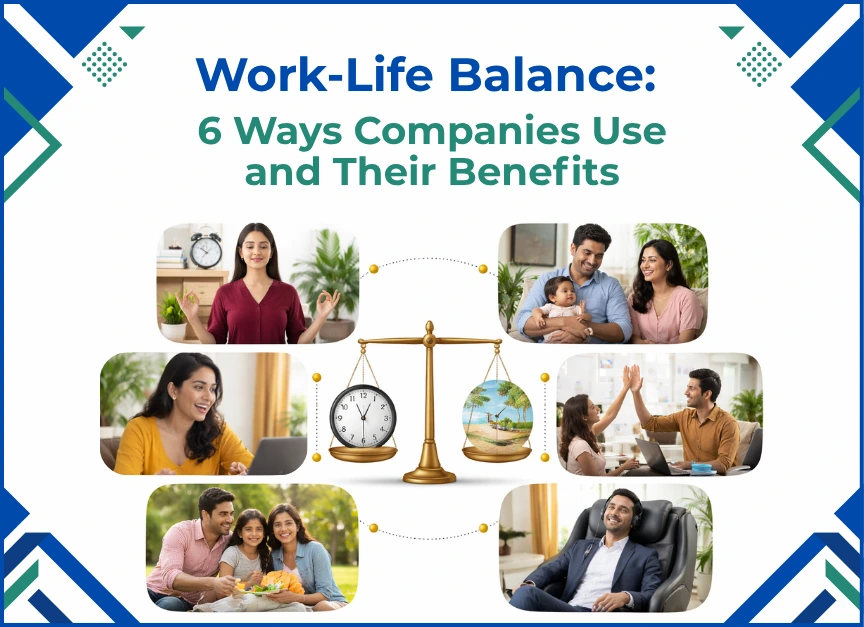
Work-Life Balance: 6 Ways Companies Use and Their Benefits
Written By JobsBob Editor Team
Updated 06 April 2026
In today’s fast-paced world, people are constantly occupied with their professional responsibilities. A significant portion of their day is spent at work, often leaving little time for personal life, family, or relaxation. Over time, this imbalance can lead to stress, fatigue, and reduced overall well-being.
As a result, the concept of work-life balance has gained increasing importance. Employees today are not only looking for competitive salaries but also value time, flexibility, and a supportive work environment. They expect organizations to recognize their personal needs and help them maintain a healthier balance between their professional and personal lives.
Work-life balance refers to the ability to effectively manage work responsibilities alongside personal commitments without experiencing stress or burnout. It allows individuals to dedicate sufficient time to their family, health, and personal interests while still meeting their professional goals and expectations.
Achieving a healthy work-life balance means giving equal importance to both work and personal life. When individuals are able to manage both successfully, they experience improved mental and physical health, higher job satisfaction, and increased productivity. This is why many professionals today prefer to work in companies with good work-life balance.
6 Common Strategies Companies Use to Support Work-Life Balance
Nowadays, many organizations are improving their policies and work environment. They are taking various steps to help employees manage both their personal and professional lives because they understand that a balanced employee can work better and feel more satisfied. Let’s explore a few common ways companies use to support the work-life balance of their employees.
1. Work Flexibility for Employees
Companies are focusing more on making work arrangements easier for employees. They are moving away from traditional fixed systems and adopting more modern working models such as;
-
Work from Home (WFH): Employees can work from home instead of coming to the office. This saves travel time and helps them manage personal tasks easily.
-
Flexible Hours: Employees can choose their working time, such as starting early or late, based on their needs.
-
Hybrid Work: Employees can work both from home and the office on different days. Hybrid work gives a balance between flexibility and office environment.
-
Compressed Workweek: Employees work longer hours for fewer days, which gives them extra days off.
2. Mental Health and Well-being Support for Employees
Many employees deal with stress, anxiety, or emotional difficulties during their work life. If these problems are ignored, they can impact both their performance and personal life. To deal with this, organizations are taking steps to support employees by providing:
-
Counseling and Therapy Services: Employees can get professional help to talk about their stress, anxiety, or personal problems.
-
Stress Management Programs: Companies arrange sessions and activities that help employees handle work pressure in a better way.
-
Mental Health Awareness: Organizations spread awareness about mental health so employees feel comfortable talking about their problems.
-
Wellness Activities: Activities like yoga, meditation, or fitness programs help employees stay relaxed and healthy.
3. Encouraging Time Off and Leave Policies
Companies understand that continuous work without rest can lead to stress and low performance. Therefore, they are also supporting work-life balance by allowing employees to take proper breaks from work. Giving time off helps employees relax and take care of their personal needs. Many companies with good work life balance support this by providing:
-
Paid Leave and Vacation: Employees are given paid holidays so they can take a break from work and spend time with family or travel.
-
Sick Leave and Mental Health Days: Employees can take leave when they are unwell or need time to rest and recover mentally.
-
Maternity and Paternity Leave: Companies provide leave for new parents so they can take care of their child and family.
4. Creating a Supportive Work Culture
A supportive culture makes employees feel comfortable, respected, and more connected to their workplace. When employees feel understood, it becomes easier for them to handle both their work and personal responsibilities. Organizations promote this by:
-
Respecting Work Boundaries: Employees are not expected to work beyond their working hours, which helps them maintain personal time.
-
Managing Workload: Companies make sure that employees are not given too much work, so they can handle their tasks without pressure.
-
Open Communication: Employees are encouraged to share their problems and ideas freely with managers.
-
Support During Difficult Times: Companies support employees during personal or professional challenges.
5. Leadership and Managerial Support
Leaders and managers play an important role in supporting work-life balance in a company. Their behavior and decisions directly affect how employees are managed. Companies with best work-life balance focus on strong leadership, where managers are supportive and understanding, helping employees feel more comfortable and confident at work. Organizations promote this through:
-
Setting Realistic Expectations: Managers give achievable targets so employees can complete their work without too much pressure.
-
Supporting Personal Needs: Employees are given understanding and support when they have personal responsibilities or problems.
-
Promoting Healthy Work Habits: Managers encourage employees to take breaks and avoid overworking.
-
Recognizing Employee Efforts: Employees are appreciated for their work, which increases their motivation and confidence.
6. Providing Resources and Training
To help employees handle their responsibilities better, companies also focus on providing proper support systems. These include different tools, guidance, and learning opportunities that make work easier and more organized. Companies with good work-life balance often provide:
-
Time Management Training: Employees are trained to plan their work properly and use their time in an effective way.
-
Professional Development Programs: Employees get opportunities to learn new skills and improve their knowledge.
-
Employee Assistance Programs: Companies provide support services to help employees deal with personal or work-related problems.
-
Mentorship and Peer Support: Experienced employees or mentors guide others and provide support when needed.
Benefits of Work-Life Balance for Employees and Organizations
Work-life balance benefits not only employees but also has a positive impact on organizations. When employees feel balanced and satisfied, they are more focused, productive, and able to contribute more effectively to overall business success.
Advantages to Employees
Let’s explore a few prominent benefits of maintaining a proper work-life balance:
1) Greater Flexibility and Employee Convenience
This allows employees to adjust their work according to their daily needs and responsibilities, making their routine more convenient and manageable. It also helps companies attract and retain employees, as flexible working options are highly valued in today’s workplace.
2) Improved Mental Health and Workplace Support
This creates a more open and supportive environment where employees feel safe to express their concerns and seek help when needed. It also helps companies reduce issues like burnout and absenteeism, leading to a more stable and positive workplace.
3) Better Rest and Increased Focus
This helps employees feel refreshed, reduces tiredness, and improves their focus when they return to work. It also helps companies reduce employee exhaustion and maintain consistent work quality over time.
4) Stronger Employee Engagement and Belonging
This creates a sense of trust and belonging among employees, making them feel more connected to the organization. It also helps companies build stronger teamwork and maintain a more stable and positive workplace environment.
5) Enhanced Communication and Team Coordination
This builds better communication and understanding between employees and managers, creating a more supportive working relationship. It also helps companies improve team coordination and maintain a more organized and efficient workflow.
6) Skill Development and Workforce Growth
This helps employees improve their skills and handle their work in a more organized way. It also allows companies to develop a more capable workforce that can adapt to new challenges and changes.
Advantages to Companies
1) Increased Productivity
When employees have a healthy balance between work and personal life, they feel more energetic and focused. This helps them complete tasks more efficiently and with better concentration. As a result, overall productivity in the organization improves.
2) Stronger Company Reputation
Companies that support employee well-being are seen as good employers. This helps them attract talented and skilled individuals. A strong reputation also increases trust among employees, clients, and stakeholders, especially for companies with best work-life balance.
3) Higher Employee Retention
Employees are more likely to stay in a company that respects their personal time and well-being. When they feel valued and supported, they develop loyalty toward the organization. This reduces employee turnover and saves hiring and training costs.
4) Improved Work Quality
A balanced employee can think clearly and avoid unnecessary mistakes. They are able to give proper attention to their work and maintain high standards. This leads to better quality output and improved performance.
5) Better Workplace Environment
Work-life balance creates a positive and stress-free work atmosphere. Employees feel happier, which improves teamwork and communication. A supportive environment also builds trust between employees and management.
The future of work is not just about productivity—it’s about balance. Choosing or creating the right work environment today can lead to a healthier and more successful tomorrow.
Work-Life Balance: A Necessity, Not a Choice
In conclusion, work-life balance has become an essential part of modern workplaces, benefiting both employees and organizations. Companies that prioritize flexibility, employee well-being, and supportive work environments help individuals manage their personal and professional lives effectively. As a result, employees feel more satisfied, productive, and motivated. Organizations that adopt these practices not only improve performance but also build a strong reputation, making them attractive choices for those seeking a balanced and healthy work environment.