Sources of Recruitment: Types, Pros & Cons
Written By JobsBob Editor Team
Updated 05 September 2026
Finding the right talent is not always as simple as posting a vacancy and waiting for applications. Recruiters need to know where their ideal candidates are, how to reach them, and which approach is most likely to attract the right fit. This becomes even more important when a company is hiring for specialized roles, expanding its workforce, or working with a limited hiring budget.
A well-planned recruitment strategy can make the hiring process more organized and help businesses avoid spending unnecessary time and resources on unsuitable candidates. But with so many ways to find talent, choosing the right approach can be challenging. In this blog, we’ll look at the different sources of recruitment, their advantages and disadvantages.
What Are Sources of Recruitment
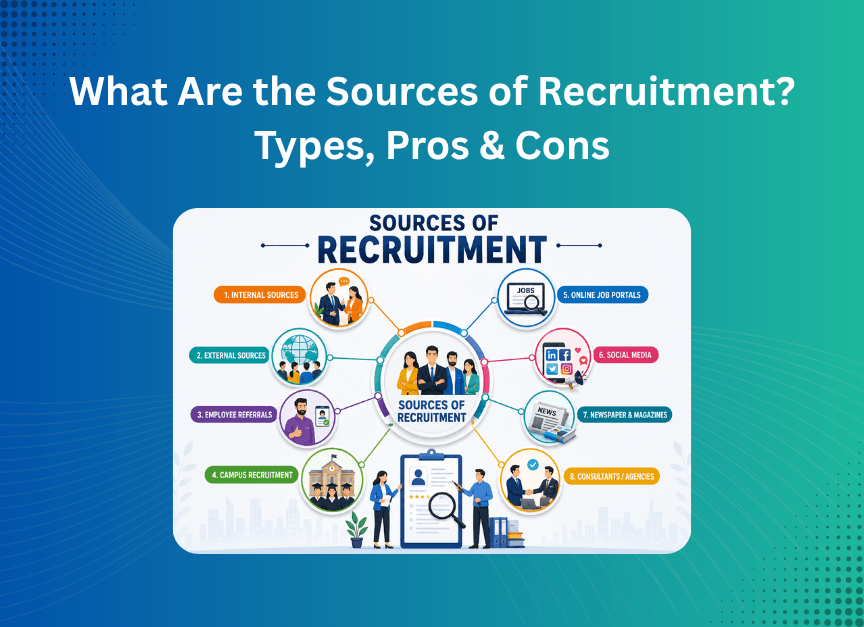
Hiring Sources are the different channels and methods organizations use to identify, reach, and attract potential candidates for available job positions. They help employers connect with suitable people who have the required skills, qualifications, and experience for a role. Organizations may use different recruitment sources depending on the position, hiring urgency, budget, and talent requirements. These sources are broadly classified into two categories: internal sources, which focus on existing employees, and external sources, which help organizations reach candidates from outside the company.
Types of Recruitment Sources
Recruitment methods or sources are broadly divided into internal and external sources of recruitment. Each category includes different methods organizations can use to find suitable candidates.
1. Internal Recruitment Sources
Internal recruitment is all about filling open roles by looking at the people who already work for you. Instead of starting a fresh job search from scratch, you look at current employees who already know your company inside and out. They understand your culture, know how things get done, and fit right into the team. Because you already know their work ethic and skills, bringing them into a new role is usually much smoother and faster. Plus, it shows your team that there’s room to grow within the company, which boosts morale and keeps your best people from leaving.
The following are the main types of internal sources of recruitment used by organizations to fill job vacancies from within their existing workforce:
-
Employee Promotion: A deserving employee may be moved from a lower position to a higher role within the organization, usually with greater authority, responsibilities, and compensation. This approach allows employers to fill senior vacancies by recognizing employees who have demonstrated suitable performance and capability.
-
Employee Transfer: Employees can be shifted from one department, branch, project, or work location to another according to organizational requirements. The employee generally continues at a comparable level, while the movement helps address staffing shortages, redistribute workloads, or utilize available skills where they are needed.
-
Internal Job Posting: Vacant positions can be announced exclusively to existing employees through internal communication channels, allowing interested and qualified staff members to apply. The organization can then evaluate applicants based on their current performance, experience, qualifications, and suitability for the available position.
-
Employee Referral Programs: Current employees may recommend suitable candidates from their personal or professional networks for organizational vacancies. Employers can review these recommendations alongside other applications, while some referral programs provide employees with incentives or rewards when their recommended candidate is successfully hired.
-
Rehiring Former Employees: Individuals who previously worked for the organization may be considered again when suitable vacancies become available. Their earlier experience with the company, familiarity with workplace practices, and understanding of organizational expectations can make them potential candidates for returning to the workforce.
2. External Recruitment Sources
External recruitment means looking outside your company to find the right person for the job. You reach out to new candidates through job boards, social media, recruitment agencies, or campus hiring drives. This approach is great when you need a specific skill set that your current team doesn't have, or when you simply want to bring in fresh energy and new ideas. While it does take more time, money, and effort to interview strangers and get them up to speed, external hiring opens the door to a much larger pool of talent that can help your business innovate and grow.
The following are the main types of external sources of recruitment organizations use to attract candidates from outside the company:
-
Job Portals & Online Job Boards: Online employment platforms allow organizations to publish vacancies and reach candidates across different industries, experience levels, and locations. Job seekers can create profiles, upload resumes, search for suitable positions, and receive vacancy notifications. Recruiters can review applications and use available filters to identify candidates matching specific qualifications and requirements.
-
Company Career Pages: Organizations can use dedicated careers sections on their websites to publish current vacancies and provide information about available positions. Candidates can review responsibilities, qualifications, experience requirements, benefits, and other employment details before applying. Direct applications also allow businesses to maintain greater control over candidate communication and the overall application process.
-
Social Media Recruitment: Organizations can promote vacancies through professional and social networking platforms to reach potential applicants. Recruitment posts may highlight available positions, required qualifications, workplace culture, and application details. These channels can also help employers connect with passive candidates, expand their reach through employee networks, and build awareness among professionals interested in the organization.
-
Recruitment Agencies & Consultants: Private recruitment agencies and professional consultants assist organizations in finding candidates for available positions. They may maintain candidate databases, review qualifications, conduct preliminary screening, and recommend suitable applicants based on the employer’s requirements. Their services can be particularly useful when organizations need specialized professionals, experienced candidates, or support with large-scale recruitment.
-
Campus Recruitment: Organizations can collaborate with colleges, universities, and other educational institutions to identify students and recent graduates for employment opportunities. Recruitment activities may include campus interviews, presentations, placement drives, career fairs, and internship programs. This approach helps employers connect with emerging talent and is particularly suitable for entry-level and graduate positions.
-
Advertisements: Organizations can communicate employment opportunities through newspapers, professional journals, industry publications, websites, social platforms, and other advertising channels. These announcements generally include information about the position, responsibilities, qualifications, experience, and application process. The selected medium depends on the type of candidates required and the reach the organization wants to achieve.
-
Walk-In Interviews & Direct Recruitment: Candidates can approach an organization directly to enquire about available employment opportunities or participate in recruitment drives without receiving an individual interview appointment. This approach is often used when employers need to fill positions quickly or recruit several workers, particularly for operational, semi-skilled, or entry-level roles.
-
Employment Exchanges & Government Job Services: Government-supported employment services maintain information about registered job seekers and available vacancies. Organizations can use these services to connect with candidates whose qualifications and experience match their workforce requirements. Such channels can be particularly useful for accessing skilled, semi-skilled, and other workers through established employment-matching systems.
-
Professional & Niche Talent Platforms: Organizations can use specialized professional platforms and industry-focused communities to identify candidates with particular technical knowledge, qualifications, or experience. These channels are especially useful for specialized positions where general employment platforms may not provide suitable applicants. Recruiters can focus their search on professionals with relevant expertise and industry backgrounds.
-
Job Fairs, Hiring Challenges & Recruitment Events: Organizations can meet potential candidates through job fairs, career events, industry gatherings, hackathons, case competitions, and hiring challenges. These activities provide opportunities to interact directly with applicants and, in some cases, assess their practical abilities. They can help employers identify candidates who demonstrate relevant skills beyond what is shown on a resume.
Pros and Cons of Internal Methods of Recruitment
Internal recruitment can offer several advantages to organizations, particularly when suitable talent is already available within the workforce. However, relying on internal hiring can also create certain limitations. Below are the key advantages and disadvantages to consider:
| Pros of Internal Recruitment | Cons of Internal Recruitment |
| 1. Faster Hiring Process: Existing employees can often move into new roles with fewer hiring stages and less decision-making time. | 1. Limited Talent Pool: Organizations are restricted to their existing workforce and may not find employees with the required expertise. |
| 2. Lower Recruitment Costs: Organizations can reduce spending on external advertising, agency fees, candidate screening, and other hiring-related expenses. | 2. Fewer Fresh Perspectives: Relying heavily on current employees can limit new ideas, approaches, and experiences entering the organization. |
| 3. Familiarity with Company Culture: Internal candidates already understand workplace values, policies, processes, and expectations, making adjustment easier. | 3. Internal Competition: Multiple employees may compete for the same opportunity, potentially creating disappointment among those who are not selected. |
| 4. Shorter Onboarding Period: Existing employees generally require less orientation because they already know the organization and its working practices. | 4. Workplace Tension: Promotions or role changes can create disagreements, resentment, or strained relationships between colleagues. |
| 5. Improved Employee Motivation: Internal opportunities encourage employees to perform better by showing that career advancement is possible within the organization. | 5. Risk of Favoritism or Nepotism: Internal decisions may sometimes be influenced by personal relationships rather than qualifications, performance, or suitability. |
| 6. Better Employee Retention: Career growth opportunities can strengthen employees’ commitment and encourage experienced staff to remain with the company. | 6. Creates Another Vacancy: When an employee moves internally, their previous position becomes vacant and may require another recruitment decision. |
Pros and Cons of External Sources of Recruitment
External recruitment can help organizations reach candidates beyond their existing workforce, especially when they need new capabilities or a larger talent pool. However, bringing in outside candidates can also require more time, resources, and adjustment. Below are the key advantages and disadvantages to consider:
| Pros of External Recruitment | Cons of External Recruitment |
| 1. Wider Talent Pool: Organizations can reach a larger and more diverse group of candidates beyond the skills available within their current workforce. | 1. Higher Recruitment Costs: External hiring may involve expenses for job advertisements, recruitment agencies, assessments, screening, and other hiring activities. |
| 2. Access to Specialized Skills: External hiring can help businesses find professionals with technical knowledge or expertise that may not currently exist internally. | 2. Longer Hiring Process: Finding suitable external candidates can require additional time for advertising, applications, screening, interviews, assessments, and selection. |
| 3. Fresh Perspectives: New employees can introduce different ideas, approaches, and viewpoints that may encourage innovation and improve existing practices. | 3. More Screening and Assessment: Recruiters generally need to evaluate a larger number of unfamiliar candidates to determine their qualifications, experience, and suitability for the role. |
| 4. New Experience: Candidates from different organizations can bring industry knowledge, professional experience, and exposure to new methods of working. | 4. Additional Onboarding and Training: New employees may need time to understand the organization’s systems, processes, responsibilities, workplace practices, and expectations. |
| 5. Supports Rapid Expansion: External recruitment allows organizations to increase their workforce when business growth creates multiple or urgent staffing requirements. | 5. Potential Cultural-Fit Issues: Candidates from outside may initially find it difficult to adjust to the organization’s culture, working style, or team dynamics. |
| 6. More Choices for Difficult-to-Fill Roles: Looking outside the organization gives employers more opportunities to identify suitable candidates for specialized or hard-to-fill positions. | 6. Existing Employee Dissatisfaction: Hiring externally for a position may disappoint current employees who expected an opportunity for promotion or career advancement. |
How to Choose the Right Recruitment Process
Not every recruitment source suits every position. The right choice between internal and external sources of recruitment depends on the role, budget, candidate type, hiring urgency, and future workforce needs.
1. Define the Role Clearly: Understand the position’s responsibilities, required skills, qualifications, and experience level. A clear job profile helps you choose a source that reaches suitable candidates.
2. Consider Your Recruitment Budget: Your budget affects which recruitment channels you can use. Low-cost options may suit limited budgets, while specialized hiring may require agencies or paid platforms.
3. Identify Your Ideal Candidate: Determine whether you need fresh graduates, experienced professionals, blue-collar workers, white-collar employees, generalists, or specialists. This helps identify the most suitable recruitment channel.
4. Review Your Previous Hiring Results: Check which recruitment sources have previously produced successful hires. Comparing results from job portals, referrals, social media, or agencies can guide future sourcing decisions.
5. Consider Hiring Urgency: If a vacancy needs to be filled quickly, internal recruitment, employee referrals, or recruitment agencies may provide suitable candidates faster than broader job-search platforms.
6. Match the Source to the Role Type: Different roles require different channels. Campus hiring may suit entry-level jobs, while agencies can help with senior roles and niche platforms with technical positions.
7. Think About Long-Term Hiring Needs: Consider whether a source can support future hiring as well. Referrals, professional networks, and employer branding can help organizations build a stronger talent pipeline over time.
Hiring doesn't have to be a guessing game. Pick the right recruitment sources today and transform how you build your dream team!
On a Final Note
There is no one-size-fits-all approach to recruitment. What works for one vacancy may not be suitable for another, which is why sourcing decisions should be made thoughtfully. By understanding the strengths and limitations of different sources of recruitment, organizations can choose an approach that fits their circumstances. A thoughtful hiring strategy can ultimately lead to better workforce decisions and provide a stronger foundation for long-term organizational success.