
What Is 5S in the Workplace? Complete Guide with Examples
Written By JobsBob Editor Team
Updated 28 July 2026
To understand “what is 5S in the workplace”, it is important to see it as a five-step workplace philosophy focused on organization, cleanliness, and discipline.
5S is a structured method used to organize, clean, and maintain workspaces so employees can work more efficiently. The core idea of 5S is simple: “A place for everything, and everything in its place.” By removing unnecessary items, arranging tools properly, and creating clear standards, organizations reduce waste such as wasted time, extra movement, and excess inventory.
The term 5S comes from five Japanese words that guide how a workplace should be managed and maintained.
The five 5S names:
-
Sort (Seiri)
-
Set in Order (Seiton)
-
Shine (Seiso)
-
Standardize (Seiketsu)
-
Sustain (Shitsuke)
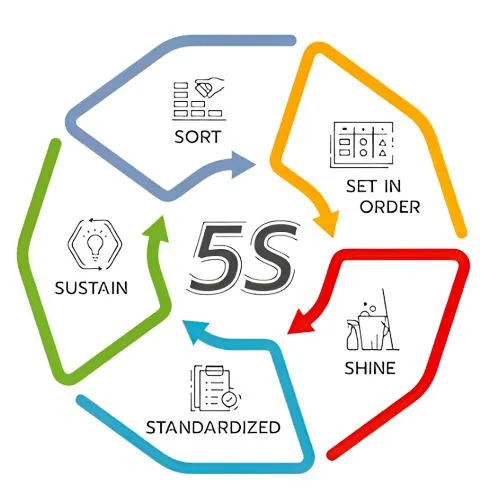
The five stages work together as a daily practice. Sort removes clutter, Set in Order organizes essentials, Shine keeps the area clean, Standardize ensures consistency, and Sustain builds long-term discipline. Together, these steps define 5S—a system that improves efficiency, safety, and overall workplace performance.
The 5S Methodology Explained: Understanding All Five Steps
To successfully implement 5S in the workplace, an organization must move through these five distinct phases:
1) Sort (Seiri)
The first step is to distinguish between what is necessary and what is not. In many offices or factories, up to 30% of the items present are never used. Sorting means separating necessary items from unnecessary ones in the workplace. Items that are not required for daily work should be removed, discarded, or stored away.
The Action: Remove all items that are not required for current production or daily tasks.
The Method: The "Red Tag" system. If a tool or file hasn't been used in a month, put a red tag on it. If it remains unused for another two weeks, move it to a central storage area or discard it.
Example: In an office, old files, broken stationery, and unused equipment are removed. In a factory, damaged tools or rarely used parts are taken out of the work area.
2) Set in Order (Seiton)
Once the clutter is gone, you must organize what remains. The goal here is efficiency of motion. Set in Order focuses on arranging essential items so they are easy to find, use, and return. Everything should have a fixed place.
The Action: Arrange items so they are easy to find, use, and return.
The Method: Use shadow boards for tools, labeled bins for office supplies, and floor markings for heavy machinery. Frequently used items should be closest to the worker.
Example: Labeling drawers, color-coding tools, and placing frequently used items within easy reach are common 5S in the workplace examples.
3) Shine (Seiso)
Shine means cleaning the workplace regularly and inspecting equipment while cleaning. It is not just about cleanliness but also about identifying problems early.
The Action: Clean the workspace daily and maintain equipment to prevent deterioration.
The Method: While a worker "shines" a machine, they look for oil leaks, loose screws, or strange vibrations. This acts as an early warning system for maintenance.
Example: Daily desk cleaning in offices or regular machine cleaning in factories.
4) Standardize (Seiketsu)
Standardize means creating clear rules and procedures to maintain Sort, Set in Order, and Shine consistently. If the first three steps are project-based, the fourth step makes them a rule.
The Action: Create schedules, checklists, and visual cues to ensure the first 3S steps are performed consistently.
The Method: Color-coding systems or digital "before and after" photos posted on walls so everyone knows what a "standard" clean station looks like.
Example: Checklists, labels, floor markings, and cleaning schedules are widely used in 5S.
5) Sustain (Shitsuke)
Sustain is the hardest part of 5s in the workplace. Sustain is about discipline and habit-building. It ensures that 5S becomes part of the daily work culture rather than a one-time activity.
The Action: Perform regular audits and provide training to make 5S a habit.
The Method: Monthly 5S competitions between departments or "Gemba Walks" by management to check on progress.
Example: Regular audits, employee training, and management support help sustain 5S practices.
How to Implement 5S in the Workplace
Implementing 5S in the workplace is not difficult, but it does require clear planning, teamwork, and long-term commitment. When done properly, 5S becomes a daily habit that improves efficiency, safety, and discipline for everyone—not just managers.
Step 1: Management Commitment
The first and most important step in implementing 5S is strong management support. Leaders must believe in 5S and actively participate in it. When managers follow 5S rules, employees feel motivated to do the same. Without management commitment, 5S may start well, but will not last long.
Step 2: Employee Training
Before starting 5S activities, employees must understand what 5S is, why it is needed, and how it benefits them. Training helps employees realize that 5S is not extra work, but a way to reduce stress, save time, and improve safety.
Step 3: Start with Sort
This step focuses on removing unnecessary items from the workplace. Unused tools, old files, broken equipment, and excess materials should be identified and removed.
Step 4: Organize with Set in Order
After removing unnecessary items, the remaining items should be arranged properly. Every tool, file, and material must have a fixed and clearly labeled place. Items used frequently should be kept close to the worker.
Step 5: Clean and Inspect (Shine)
Clean the workplace regularly and inspect equipment at the same time. Cleaning helps maintain hygiene and also allows workers to notice problems such as leaks, damage, or wear at an early stage.
Step 6: Create Standards
To make 5S consistent, clear standards must be created. This includes cleaning schedules, checklists, labels, color codes, and visual instructions that show how the workplace should look.
Step 7: Sustain through Audits
Sustain is about maintaining 5S over the long term. Regular audits, reviews, and feedback sessions help ensure that employees continue following 5S practices every day.
The Major Benefits of 5S in the Workplace
Why do companies invest thousands of hours into this system? The benefits of 5s in the workplace are measurable and impact the bottom line.
a) Enhanced Safety
A cluttered floor is a dangerous floor. One of the most immediate benefits of 5s in the workplace is a reduction in accidents. When walkways are clear and hazardous materials are properly labeled and stored, the risk of trips, falls, and chemical exposure drops significantly.
b) Increased Productivity and Efficiency
When you eliminate the "search time" for tools or documents, you increase "value-added time." Studies show that implementing 5S can increase floor space by 20% and improve overall production speed by 10-30%.
c) Improved Quality Control
A clean and organized work environment leads to fewer mistakes. In a messy workspace, it is easy to accidentally pick up a 9mm bolt instead of an 8mm bolt, or to skip a step in a manual process. 5S creates "visual management," where errors become obvious before they reach the customer.
d) Better Maintenance and Reduced Downtime
The "Shine" phase is essentially a form of preventive maintenance. By cleaning machines daily, operators notice small problems (like a frayed belt) before they lead to a total machine breakdown. This saves the company massive amounts of money in emergency repairs.
e) Boosted Employee Morale
No one likes working in a "messy" environment. An organized workplace makes employees feel like professionals. It reduces the stress of "losing things" and gives the team a sense of pride in their workstation.
Conclusion
Implementing 5S in the workplace is a low-cost yet highly effective way to improve organization, productivity, and overall workplace performance. By understanding and consistently applying its five principles—Sort, Set in Order, Shine, Standardize, and Sustain—organizations can create a cleaner, safer, and more efficient work environment.