
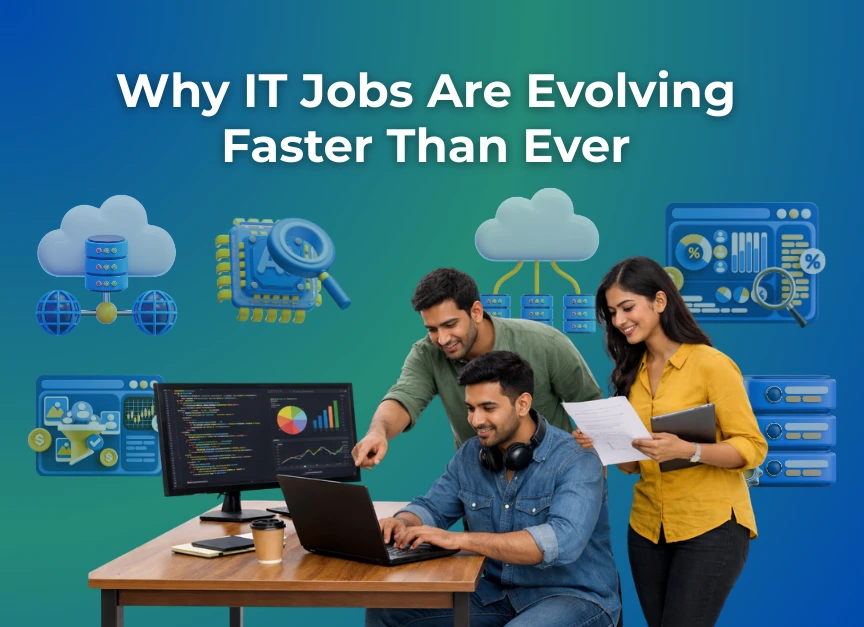
Why IT Jobs Are Evolving Faster Than Ever
Written By JobsBob Editor Team
Updated 11 March 2026
In today’s world, technologies such as artificial intelligence, cloud computing, big data, and automation are changing how technology specialists work and what companies expect from them. People use digital technology in many areas such as communication, education, healthcare, and many others. Over the years, technology has changed the way people work, interact, and access information. Many businesses now depend on various types of digital platforms or software to stay competitive in a fast-changing environment. Modern tools and systems help organizations work more efficiently, manage information easily, and provide better services to their customers.
Among the many industries influenced by these developments, the Information Technology (IT) sector has experienced some of the most remarkable changes. Companies are constantly adopting new technologies to store data, expedite processes, and deliver services more effectively. Therefore, the demand for skilled IT professionals has increased and understanding these changes explains why IT jobs are evolving faster than ever. Hence, the roles, responsibilities, and skills required in IT sector jobs continue to change as new technologies are introduced.
Key Factors Driving the Evolution of IT Careers
The following factors explain why IT careers are evolving quickly and creating new opportunities for professionals:
1. Continuous Technological Advancements
This is one of the main reasons behind the rapid growth of the IT sector.
-
Growth of Advanced Technologies: The IT industry is strongly influenced by new technologies such as Artificial Intelligence (AI), cloud computing, big data, and the Internet of Things (IoT). These technologies help businesses store, manage, and analyze information more efficiently. Because of this, IT experts' demand is on peak.
-
Faster Innovation Cycles: Technology is developing much faster than before. New software, platforms, and digital tools are being introduced regularly, which quickly uplift the requirements of IT jobs. Therefore, IT experts need to stay updated with the latest technologies and grab the opportunities.
-
Increased Demand for Technical Expertise: As modern technologies become more common, companies need skilled experts who can manage and develop these systems. Organizations look for professionals who understand new technologies and can use them effectively. This increasing demand is another reason why IT positions continue to evolve.
2. New Skill Requirements in IT Industry
Companies today prefer employees who have updated knowledge and technical skills. Because of this, professionals need strong knowledge of modern tools, programming languages, and software platforms to meet industry expectations.
-
Working with Modern IT Tools: As technology continues to change, IT professionals need to regularly learn new tools and systems. Companies often update their software and introduce new platforms to improve their work. Professionals must be able to quickly adapt to new software platforms and digital tools introduced by organizations. This helps them stay updated with industry requirements and continue growing in their careers.
-
Effective Technical Skills: Skills such as programming, database management, and system security are becoming more helpful. Companies look for professionals who can develop software, manage data, and protect digital systems. Strong technical skills help technology specialists perform their jobs more effectively.
-
Continuous Skill Improvement: The IT industry changes quickly, so professionals must continue learning throughout their careers. Many people take online courses, training programs, and professional certifications to improve their knowledge. Many IT professionals improve their expertise through online courses, training programs, and professional certifications that help them strengthen their technical knowledge.
3. Digital Transformation of Companies
Many companies are now using digital technologies to improve their business operations. This change is known as digital transformation. This shift toward digital systems has created new career opportunities with technical expertise.
-
Businesses Moving Online: Many companies now provide services through websites, mobile apps, and online platforms. Customers can buy products, make payments, and communicate with businesses online. This increases the need for IT experts who can develop and manage these digital systems.
-
Use of Cloud and Digital Platforms: Organizations are using cloud computing and digital tools to store data and run applications. Cloud platforms allow companies to access information from anywhere and improve collaboration. IT professionals are needed to manage and maintain these cloud systems.
-
Growing Demand Across Industries: Digital technology is now used in many sectors such as healthcare, banking, education, retail, and manufacturing. These industries depend on IT systems to operate efficiently and securely. These industries depend on reliable IT systems to manage data, maintain security, and support their daily operations.
4. Automation and Smart Systems
Modern software and intelligent systems can complete routine tasks automatically. This helps companies improve efficiency and reduce manual work. As a result, the roles of IT specialists are shifting toward more advanced and strategic tasks.
-
Digital Tools for Routine Tasks: Many repetitive tasks, such as system monitoring, data processing, and software testing, can now be done automatically using automation tools. This saves time and reduces human errors. IT professionals can focus more on solving complex technical problems.
-
Use of Artificial Intelligence: Artificial Intelligence (AI) is widely used to analyze data, detect problems, and improve decision-making. AI-powered systems can perform tasks that once required human effort. Technology specialists now work on developing, managing, and improving these intelligent systems.
-
Shift Toward Strategic Roles: Because automation handles routine work, IT professionals are now focusing more on planning, innovation, and system development. Their role has shifted from basic technical support to designing and managing advanced technologies.
Reasons Why IT Careers Are Highly in Demand
IT careers have become very popular in recent years. The rapid development of technology has made the IT sector one of the most important industries in the world. Many businesses depend on digital systems and software to run their operations.
-
High Salary and Job Security: One of the main reasons people choose IT careers is the opportunity for high salaries. Many IT positions offer good pay, even at the entry level. The IT jobs' salary per month can be quite attractive compared to many other industries, especially for professionals who have strong technical skills and experience.
-
Creative and Innovative Work: The IT field allows professionals to work on creative and innovative projects. They may develop mobile applications, design websites, create software, or build new digital solutions. This makes IT careers interesting and challenging.
-
Rapid Growth of the Technology Industry: The technology industry is growing very quickly around the world. New technologies and digital services are being developed every year. This growth creates many job opportunities and career advancement for IT professionals.
-
Flexible Work Options: Many IT sector jobs offer flexible work arrangements such as remote work, hybrid work, and freelance opportunities. This allows professionals to work from different locations and manage their schedules more easily. Flexible work options also help improve work-life balance.
-
Opportunities in Many Industries: IT experts can work in many different industries, not only in technology companies. Sectors such as healthcare, banking, education, retail, and manufacturing all need IT experts. This wide demand increases job opportunities for people working in IT.
New and Emerging Roles in the IT Industry
The rapid growth of technology has created many new career opportunities in the IT industry. As businesses adopt modern technologies, they need skilled professionals to manage and develop digital systems. Many new IT roles require specialized knowledge and technical expertise. Some of these roles are considered among the top IT jobs in demand for future as companies continue to invest in advanced technologies and digital solutions.
-
AI Engineer: AI Engineers develop intelligent systems that can analyze data and make decisions. They work with technologies such as machine learning and artificial intelligence to build smart applications and automated systems.
-
Data Scientist: Data Scientists study large amounts of data to find useful patterns and insights. Their work helps organizations make better decisions, improve services, and understand customer behavior.
-
Cybersecurity Analyst: Cybersecurity Analysts are responsible for protecting computer systems and networks from cyber threats. They monitor security risks, prevent attacks, and ensure that sensitive information remains safe.
-
Cloud Engineer: Cloud Engineers manage cloud platforms that store data and run applications online. They design, maintain, and improve cloud systems to ensure that businesses can access their data securely and efficiently.
-
DevOps Engineer: DevOps Engineers help improve collaboration between software development and IT operations teams. They use automation tools to make software development and deployment faster and more reliable.
Conclusion
As we wrap up this blog, it is clear that the IT industry continues to grow and change with new technologies and digital innovations. These changes are creating more opportunities for professionals interested in IT careers. By developing technical skills and staying updated with modern tools, individuals can build successful careers in technology and explore some of the top IT jobs in demand for future. With continuous learning and adaptability, professionals can thrive in this fast-evolving industry.