
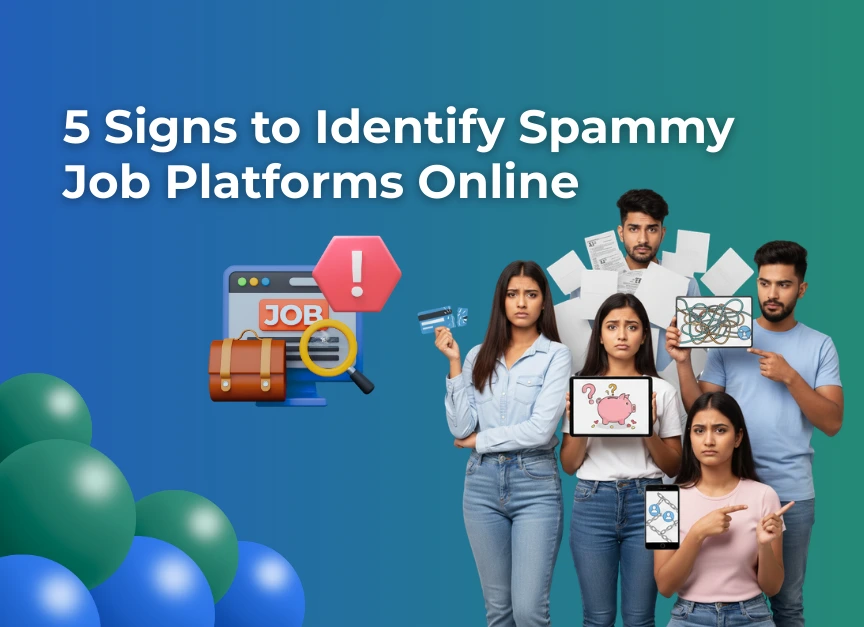
5 Signs to Identify Spammy Job Platforms Online
Written By JobsBob Editor Team
Updated 19 February 2026
Searching for a job today almost always starts online. Most candidates rely on a job platform or app to upload resumes, apply for roles, and connect with recruiters. While many platforms genuinely help people secure meaningful employment, there is also a growing number of unsafe job sites that exist solely to exploit job seekers.
These unsafe platforms do not always look suspicious. Many have professional websites, polished mobile apps, fake recruiter profiles, and convincing communication. Because of this, thousands of job seekers fall victim every year—losing money, sharing sensitive documents, and wasting months chasing jobs that never existed. Knowing how to identify these platforms is critical for protecting yourself.
In this blog, you will get detailed information on how to recognize such portals and how to prevent yourself from such risk while job hunting.
Here are 5 Clear Signs of an Unsafe Job Platform
Below are five clear signs of a scam job platform, so that anyone reading this can immediately recognize the risk.
1) They Ask You for Money (The "Pay-to-Work" Scam)
One of the most dangerous warning signs on any job platform is a demand for upfront payment. In a genuine hiring system, job seekers are never required to pay to access jobs. Employers pay the job search platform to find suitable candidates—not the other way around. The moment a platform asks you for money to apply, it should trigger immediate suspicion.
Unsafe online job platforms rarely ask for money openly. Instead, they disguise the payment using professional-sounding terms such as premium processing, mandatory background verification, profile activation, or priority interview access. To make the request believable, scammers often mention big brand names.
For Instance: You receive a call saying, “Your profile has been shortlisted for a role at Reliance Industries. To unlock the interview schedule, you need to pay a small portal activation fee of ₹500.” The amount feels low, the company name sounds impressive, and the urgency pushes many candidates to pay without verifying. Once the payment is made, one of two things usually happens. Either new fees suddenly appear—such as GST, document verification, or training charges—or the recruiter disappears completely. In some cases, the platform is actually a phishing site designed to capture your UPI, card details, or OTPs.
How to stay safe?
Legitimate platforms allow users to search and apply for jobs without paying to access interviews. While they may offer optional premium services, payment is never mandatory for basic job applications. Any job platform that demands payment to apply for a role is unsafe and should be avoided immediately.
2) Excessive Information Harvesting (Data Phishing)
When you sign up on a job platform app, it is normal to share basic details such as your name, phone number, email address, education, and work experience. Genuine job search platforms need this information to match you with suitable roles. However, unsafe online job platforms often go far beyond what is reasonable and necessary.
A major warning sign appears when a job platform asks for highly sensitive personal or financial information during registration. This includes your Aadhaar number, PAN card details, bank account information, or a cancelled cheque—especially before any interview or offer letter. At this stage, such data is completely unnecessary. This is not recruitment—it is data phishing. Unsafe platforms collect sensitive data to misuse it later. Scammers can use your Aadhaar and PAN details to commit identity theft, open fraudulent bank accounts, apply for instant loans, or link your documents to illegal activities without your knowledge.
For Instance: While creating a profile on a job platform, you are told that Aadhaar and PAN are “mandatory for verification” or that a cancelled cheque is required to “confirm salary processing.”
How to stay safe?
Real employers and legitimate job search platforms never ask for Aadhaar, PAN, or bank documents at the application stage. These documents are only requested after you receive an official offer letter, during formal onboarding, and usually through secure company systems. Hence, never share such information during the application process.
3) Lack of Recruiter Accountability and Verification
A reliable job search platform does more than just list vacancies. It acts as a gatekeeper between job seekers and employers. Before allowing a company or recruiter to post jobs, a trustworthy platform verifies whether the business is real, legally registered, and authorised to hire. This verification protects candidates from fake recruiters and fraudulent job postings.
On unsafe online job platforms, recruiter accountability is almost non-existent. You may see a large number of job postings where the recruiter’s identity is unclear or completely hidden. Many scammers use generic titles like “HR Team” or “Hiring Manager” without mentioning a real company name. Others use free email services instead of official domains.
For Instance: A job post claims to be from TCS, but the recruiter’s email ID is hr_tcs_recruitment@gmail.com instead of an official @tcs.com address. This mismatch is a serious red flag. Large companies never use free email services for recruitment.
How to stay safe?
When a platform allows anonymous recruiters or unverified employers to post jobs, anyone with a mobile number can pretend to be hiring for senior roles like “Global Manager” or “Project Lead.” This opens the door to fake interviews, fee scams, and data theft. There is no accountability because the platform has not verified who is posting the job. Before applying, always check whether the job platform app shows a Verified Employer badge or similar proof.
4) Poor Security Infrastructure and Transparency
The technical quality of a job platform app or website reveals a lot about whether it is genuine or unsafe. Building and maintaining a secure digital infrastructure costs money and effort. Legitimate online job platforms invest in security because they handle sensitive user data. Scam platforms usually cut corners because they do not plan to operate long-term.
One of the easiest checks any jobseeker can do is look at the website URL. A safe job search platform always uses https://, which means your data is encrypted while being transmitted. If the website address starts with http:// instead of https://, your information—such as phone number, email, or uploaded resume—is not protected.
Modern browsers like Google Chrome clearly warn users by showing “Not Secure” in the address bar. If you see this warning on a job platform, do not enter any personal details.
How to Protect Yourself ?
Legitimate job platforms are transparent about how they operate. They clearly display Terms of Service, Privacy Policy, and sometimes Refund Policies in the website footer. These pages explain how your data is collected, stored, and used.
Unsafe platforms often have missing legal pages, broken links that lead to “404 Not Found,” or poorly written content filled with grammatical errors. This usually indicates that the platform was created quickly, without legal review, just to trap users.
5) Suspicious App Permissions
If you are using a job platform app on your smartphone, the permissions it asks for can reveal whether it is safe or unsafe. A genuine job search platform app only needs very limited access to function properly. When an app demands excessive permissions, it is often a sign that the app’s real purpose is not recruitment, but surveillance or data misuse.
Major Warning Signs to Watch For
-
Read your SMS – This is often done to steal bank OTPs or verification codes.
-
Access your contacts – Scammers use this to spam your friends and family or impersonate you.
-
Use your camera or microphone at all times – This has no role in job searching and can indicate spying.
-
Track your GPS location continuously – Location tracking is unnecessary for job applications and can be misused.
These permissions are commonly requested by spyware or scam apps, not legitimate recruitment platforms.
How to stay safe?
A safe job app usually requires access only to:
-
Files or storage, so you can upload your resume or documents.
-
Basic notifications, to alert you about job updates.
Always download job apps only from the Google Play Store or Apple App Store. Even then, read user reviews carefully. If multiple users complain about spam calls, unauthorised messages, OTP misuse, or scam activity, do not ignore it.
Final Thoughts
A genuine job platform exists to connect people with real opportunities. An unsafe job platform exists to exploit jobseekers financially and emotionally. The difference becomes clear when you look closely at behavior, not appearance. If a job platform asks for money, hides information, makes unrealistic promises, uses unprofessional communication, or pressures you into quick decisions, it is unsafe. Awareness and verification are your strongest protections. A job should improve your life—not put you at risk. Always choose your job search platform carefully.